
CASE STUDY / THE ROBIN FOUNDATION
Connected systems for a growing nonprofit.
The Robin Foundation works across overdose prevention, naloxone access, community partnerships, training, volunteers and public awareness.
As those activities grow, the digital challenge becomes larger than the website itself.
Reamids has been working across the public experience and the operational systems behind it, creating a more structured way to collect information, organize records and support the next action.
PROJECT / ONGOING
ORGANIZATION
The Robin Foundation
SECTOR
Nonprofit / Community Health
WORK
Website
CRM
Forms
Operational workflows
SYSTEM AREAS
Volunteers
Partners
Naloxone operations
OEC cabinets
Training & events
WEB → CRM → OPERATIONS
THE CONTEXT
The organization does not operate through one simple customer journey.
The Robin Foundation works with different groups for different reasons.
A community partner may need naloxone.
A volunteer may need to register, attend training or support an event.
A cabinet may need to be checked, replenished or serviced.
Naloxone may move from incoming inventory to volunteers, partners or distribution activity.
Training sessions, events and community outreach create another layer of information that needs to be recorded and followed.
The challenge is not simply storing information. It is keeping the relationships between those activities understandable.
MANY MOVING PARTS
One organization. Several kinds of work moving at the same time.
Instead of treating every activity as a generic contact or task, the system needs to recognize what each record actually represents and how it connects to the others.
PEOPLE
Volunteers
Contacts
Community partners
SUPPLY
Naloxone lots
Inventory movement
Distribution
PROGRAMS
Training
Foundation events
Volunteer assignments
FIELD OPERATIONS
OEC cabinets
Service activity
Follow-up
The system needs to connect these areas without turning everything into the same kind of record.
THE SYSTEM
From public interaction to operational action.
The website is the interaction layer. Forms capture structured information. CRM organizes the operational records. Workflows and follow-up help move the information toward the next action.
01
INTERACTION
Website
Volunteer page
Request forms
Event information
02
COLLECTION
Forms
Structured fields
Uploads
Sign-ins
03
ORGANIZATION
CRM
People
Partners
Inventory
Programs
04
ACTION
Assignment
Distribution
Service
Follow-up
05
VISIBILITY
Status
Reminders
Reporting
Next step
The website is one entry point into the system, not the entire system.
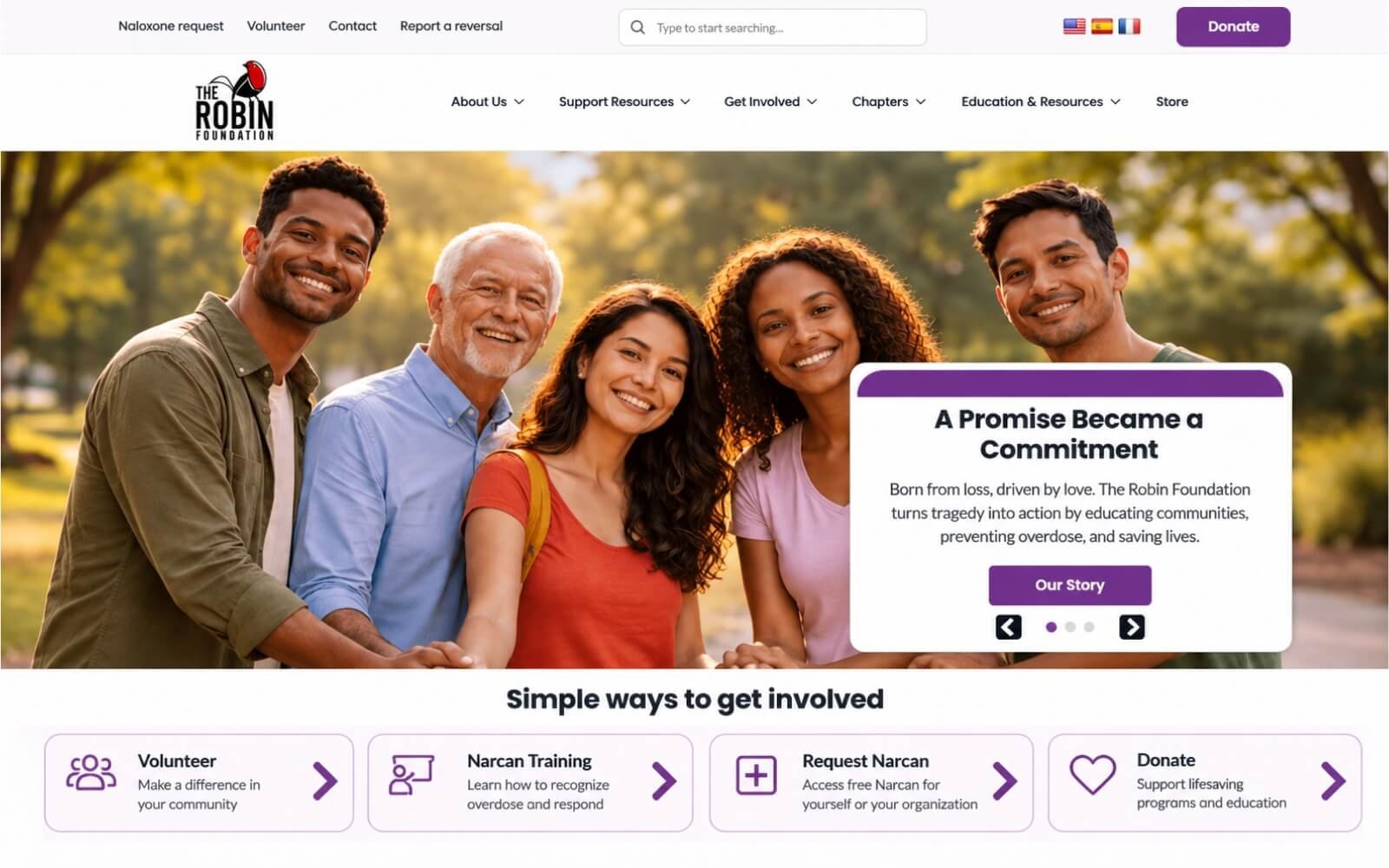
PUBLIC INTERACTION LAYER / ROBINFOUNDATION.ORG
THE WEBSITE
Give different audiences a clear place to begin.
The public website has to support people arriving with very different intentions.
Someone may need naloxone.
Someone else may want to volunteer, attend training, learn about the organization, support the mission or find resources.
The website therefore needs to do more than communicate the brand. It has to direct each visitor toward the appropriate next action.
REQUEST NALOXONE →
VOLUNTEER →
TRAINING & EVENTS →
RESOURCES →
SUPPORT / DONATE →
Each action creates information that may need to continue beyond the website.
THE OPERATIONAL LAYER
Structure the work around what the organization actually needs to track.
The CRM architecture is being shaped around the Foundation's operational records rather than forcing every activity into a traditional sales pipeline.
PEOPLE & RELATIONSHIPS
Community Partners
Organizations and community relationships.
Contacts
People connected to organizations and Foundation activity.
Volunteers
Volunteer information, status, availability and participation.
NALOXONE & FIELD OPERATIONS
Naloxone Lots
Lot, expiry and incoming supply information.
Inventory Movements
Movement of naloxone between holders and locations.
Distributions
Records of naloxone distributed.
OEC Cabinets
Placed Overdose Emergency Cabinets.
OEC Service Logs
Checks, replenishment and service activity.
PROGRAMS & PARTICIPATION
Training Sessions
Training activity and supporting documentation.
Foundation Events
Organization and community events.
Volunteer Assignments
Volunteer participation in Foundation work.
Not every important record is a lead or a deal.
ACCESS MODEL
Collect information without putting every participant inside the CRM.
Not everyone who contributes information needs a CRM login.
Public forms and operational forms can collect the information needed from volunteers, partners or other participants while designated internal users manage the structured records behind them.
This keeps the external experience simpler while preserving a controlled operational layer.
OUTSIDE CRM
VOLUNTEER / PARTNER / PARTICIPANT
↓
FORM
Registration
Activity
Distribution
Event / training information
INSIDE CRM
CRM
Structured record
↓
INTERNAL REVIEW
Assigned people
Next action
Follow-up
HOW THE SYSTEM THINKS
Design around the movement of work, not just the storage of data.
The examples below illustrate the operational structure being built. Automation and reporting capabilities should only be described as live where they have actually been implemented.
VOLUNTEER
Register
Record
Review
Group / status
Assignment
Participation
Volunteer information enters through a form and becomes structured information that can support onboarding and future activity.
NALOXONE
Receive
Identify lot
Record movement
Distribute
Know holder / recipient
Follow up
Lot and movement records provide a clearer structure for understanding where supply came from and where it went.
OEC CABINET
Place
Record location
Check
Service / refill
Record activity
Next check
The cabinet becomes an operational asset with service history rather than simply a location on a list.
AN EVOLVING SYSTEM
Build the operational foundation first. Improve from real use.
This is an ongoing systems project.
Some components are already structured while other workflows, reporting and automation continue to be refined as the Foundation's processes become clearer.
STRUCTURED
CURRENT FOUNDATION
CRM architecture for key operational areas
Structured volunteer intake
Operational records for naloxone, distributions and OEC activity
Forms as an external collection layer
A defined access model between participants and CRM users
Website and operational systems considered as connected layers
ITERATING
CONTINUING WORK
Reminder and follow-up workflows
Reporting
Operational dashboards
Event and volunteer participation processes
Inventory visibility
Process refinement based on actual use